
CSW Session Highlights: Key Insights and Lessons Learned
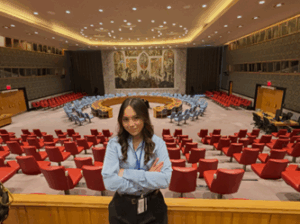
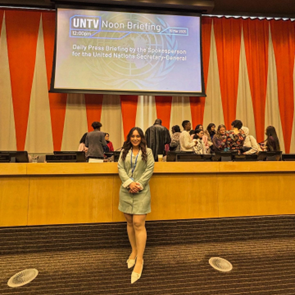
I served as a UNA-USA delegate for the 69th session of the Commission on the Status of Women (CSW) at the United Nations Headquarters in New York City from March 17-March 21,2025. Being at CSW filled me with purpose and a renewed drive to serve my community. The opportunity to serve as a delegate aligns with my personal mission to bridge global advocacy and local action.
2025 marks the 30th anniversary of the Beijing Declaration and Platform for Action, a historic global commitment agreed by 189 governments in 1995, at the Fourth World Conference on Women. It’s a living framework that speaks directly to the challenges we face globally and here at home. Locally, it gives us a blueprint to advocate for stronger protections, data-driven policies, and community-centric solutions that reflect the lived realities of those most impacted.
This year’s CSW theme was centered on accelerating the implementation of the Beijing Declaration and Platform for Action and the session served as a powerful moment to reflect on how far we’ve come, while also confronting the challenges that still stand in the way. From local to global, it was a call to assess what’s working, where we’re falling short, and how we can recommit to advancing the rights, safety, and dignity of women and girls everywhere. For me, it was a reminder that this isn’t just global, it’s deeply personal, and it starts in our own communities.
Attending CSW was an inspiring experience filled with dynamic conversations, opportunity to meet other passionate advocates, and learn about actionable strategies. I engaged with leaders across ages, countries, and backgrounds who shared the vision and mission to come together to exchange innovative ideas for community development and economic development. These cross-cultural, intergenerational exchanges reminded me that real innovation happens when we collaborate across differences to address issues we all face during times of crisis.
I had the opportunity to participate in ministerial roundtables, interactive dialogues, high-level panels, and side events focused on thematic issues like access to public services, social protections, and sustainable development. What made my CSW experience unique is its intergenerational and intersectional space for advocates and changemakers to come together to co-create solutions for global action.
No Child Left A Bride: Successes & Setbacks In The Global Effort To End Child Marriage
Global leaders, advocates, and policymakers hosted a session in partnership with the Clinton Global Initiative (CGI). The panel was both a powerful and heartbreaking dialogue. Although often framed as a global issue, child marriage is still legal under certain conditions in my home state, California. This dialogue highlighted the legal, educational, and cultural strategies needed to end child marriage as outlined in the Beijing Platform for Action. Panelists including Dr. Chelsea Clinton, Equality Now, Girls Not Brides, Unchained At Last, and government leaders from Sierra Leone and the Dominican Republic highlighted both successes and challenges in the fight against child marriage.
Child marriage is a harmful practice and one of the most profound manifestations of gender inequality. It is a human rights violation that legitimizes abuse and strips girls of their autonomy. The impacts are lifelong: it disrupts education, undermines health and safety, and increases vulnerability to exploitation and violence. As advocates, we push for a clear and simple standard—the minimum age for marriage should be 18. No exceptions.
Yet in the U.S., legal loopholes continue to put minors at risk. Child marriage occurs when one or both parties are under 18. It is still legal in 34 states.
As of June 2025, California, Mississippi, New Mexico, and Oklahoma do not require any statutory minimum age for marriage when parental or judicial waivers are considered.
Between 2000 and 2018, nearly 300,000 children were married in the United States, the vast majority of them girls married to adult men. These numbers represent children whose futures were altered by systems that failed to protect them.
As an Ambassador for Global Hope 365, this issue is deeply personal to me. CSW reinforced how it is a national responsibility and a California responsibility.
The stories shared at CSW reminded me that behind every policy gap is a real child whose life and choices are shaped by our systems. The urgency of legislative reform is clear: these loopholes must be eliminated to align U.S. law with international human rights standards and to ensure that all children are protected from coercion, abuse, and exploitation.
Forced marriage undermines girls’ futures, limits workforce participation, and deepens cycles of poverty. Speakers emphasized that education is the most effective tool to prevent early marriage as each additional year of schooling significantly lowers the likelihood of forced marriage and increases a girl’s lifetime earning potential. The need for survivor-centered, intersectional approaches elevate community voices and shift cultural norms, especially the harmful romanticization of child marriage often used to delay legal reforms.
Harnessing Artificial Intelligence for Women’s Empowerment: Navigating Challenges and Opportunities
Sessions led by UNESCO and grassroots media leaders centered the urgent need to tackle the rise of online and offline gender-based violence, as well as bias in artificial intelligence. In California’s rural and urban communities, the digital divide and lack of ethical tech infrastructure directly impact access to education, healthcare, and safety. These conversations affirmed the importance of investing in tech tools—something we’re already pursuing through partnership with local organizations across the Southern region.
Without access to ethical, inclusive technology, communities can be deprived of access to job opportunities, civic engagement, and essential services. These sessions reminded me that tech policy is community policy, and we need to ensure that emerging innovations are reflective of community needs.
Bridging the digital divide is essential to building an economy where communities can access opportunity, regardless of ZIP code. In today’s world, internet access and digital literacy are as critical as clean water and electricity yet millions in the U.S. still lack both.
Closing this gap means investing in infrastructure, devices, training, and culturally relevant support systems that meet people where they are to unlock the full potential of our communities.
Women Rise for All: Turning Hope into Action
The Women Rise for All initiative launched by Deputy Secretary-General Mohammed is built on the principle that when women lead collaboratively, we move closer to a world that reflects the values of collective care. Over 300 women’s organizations and networks from 96 countries came together for this conversation. The conversation featured United Nations Deputy Secretary-General Amina J. Mohammed and President of Iceland H.E. Halla Tómasdóttir, and was moderated by TIME CEO Jessica Sibley.
President Tómasdóttir spoke about what it truly means to normalize women’s leadership through sustained systems of representation and inclusion. Iceland’s leadership model is rooted in equity where women lead across sectors, from government to civil society. This intentional representation has not only shaped more inclusive policies but also shifted cultural norms around gender and power. Iceland’s example shows that when equity is embedded into the structure, not just the strategy, lasting transformation becomes possible.
Deputy Secretary-General Amina Mohammed spoke truth to the call to action that as we rise we bring others with us. Her words were a reminder that leadership is about shared humanity, and our collective responsibility to protect and restore human dignity.
This global conversation made it clear that the same principles apply locally when we intentionally elevate community voices, invest in women’s leadership, and design programs with those most impacted, our neighborhoods become stronger, safer, and more equitable. The leadership models shared at CSW reinforced that cities, counties, and local organizations have the power to normalize inclusive decision-making, strengthen cross-sector partnerships, and create pathways for women and girls to lead. Change may be global in scale, but it is always local in practice.
Women in Conflict: Post-War Recovery in Ukraine
An unforgettable experience was being part of a working group that focused on women living in conflict zones. This dialogue was deeply emotional and eye-opening. Together with advocates, peacebuilders, and civil society leaders, we collaborated on recommendations to strengthen global protections and elevate the voices of women impacted by war, displacement, and systemic violence. Designing local services with global consciousness is critical because violence, displacement, and resilience are not bound by borders.
The session highlighted the devastating toll the war in Ukraine has taken on women and children, many of whom have been displaced, separated from their families, or subjected to gender-based violence. Conflict has stripped away access to essential needs such as housing, healthcare, education, and safety placing women and girls at increased risk of trafficking and exploitation. The working group created a safe and sacred space where stories of resilience were shared. Ukrainian women continue to lead, rebuild, and care for their communities even while navigating unimaginable loss.
The reality facing women and girls in Ukraine after three years of full-scale war is staggering. Decades of progress toward gender equality have been rolled back, leaving women more vulnerable to violence, poverty, and systemic exclusion. Nearly 6.7 million women now require life-saving assistance, and millions have been displaced both within and beyond the country’s borders. Gender-based violence has surged, unemployment for women has risen sharply, and the wage gap has doubled since the war began. Women are carrying heavier caregiving responsibilities with fewer resources, all while navigating trauma, disrupted livelihoods, and the collapse of supportive infrastructure like childcare and healthcare. These numbers represent lives destabilized by conflict and communities fighting to survive.
Yet even with these immense challenges, Ukrainian women are leading with extraordinary strength. They are on the frontlines as humanitarian workers, civil society organizers, entrepreneurs, and community mobilizers. One in every two new businesses in Ukraine is now founded by a woman, and new opportunities are opening in sectors previously closed to them, from security to demining. But resilience does not replace the need for structural support. Women need expanded humanitarian assistance, mental health services, legal protections, and meaningful participation in shaping Ukraine’s recovery. Investing in women-led organizations and gender-responsive policies is essential to rebuild a stronger, safer, and more equitable Ukraine. When women are supported, communities heal faster and the path toward sustainable peace becomes possible.
Recovery is also about rebuilding lives with dignity, compassion, and care. The stories shared in this working group reaffirmed why we must bring trauma-informed, survivor-centered approaches into every aspect of our local work, from housing and social services to community safety and economic development. Drawing from global lessons and standing in solidarity with those directly impacted, we can design systems at home that honor resilience, restore dignity, and create communities where healing is possible.
Harnessing The Power Of Data To End Harmful Practices
Sessions hosted by UNDP and UNICEF emphasized the role of community-informed, disaggregated data in shaping better policies. I attended was the launch of UNICEF’s new e-learning course focused on using data to end child marriage and female genital mutilation (FGM)—both of which are clear violations of human rights and remain deeply rooted in social and cultural norms. These harmful practices are directly addressed in the Sustainable Development Goals through Target 5.3, which calls for their global elimination by 2030.
The session emphasized that while advocacy and policy reform are critical, data is just as powerful a tool in this fight. Effective data collection, analysis, and interpretation allow us to understand not only the scope of these issues, but where and how to intervene for the greatest impact. UNICEF’s new free, self-paced course is designed for practitioners and advocates to sharpen their skills in using data to inform policy, resource allocation, and programming.
A key is to continue refining how we collect and share data to ensure we’re not missing those most in need across Southern California’s varied regions.
Data must not only reflect the numbers, it must reflect lived experience. This means disaggregating by race, gender, language, geography, and immigration status to uncover where gaps persist and who is being left behind.
By elevating community-informed insights, we can design policies that are more targeted, efficient, and effective. When communities are involved in shaping the data that represents them, trust is built and outcomes improve. Local organizations play a critical role in gathering culturally relevant data that traditional systems often overlook. Investing in data infrastructure is just as important as investing in programs to ensure resources are directed where they’ll have the greatest impact.
Film Screening: Mercy – A Story of Resilience and the Call for Systemic Change
Mercy, a powerful short film directed by Georgia Fernandes, follows the story of a 15-year-old girl in Kenya navigating the harsh realities of poverty, limited access to education, and the gaps in social protection systems. Inspired by true stories, Mercy beautifully and painfully illustrates how systemic barriers continue to disproportionately impact young women and girls—and yet, it is also a story of strength, survival, and hope.
The screening was followed by a fireside conversation with the filmmaker, where the discussion centered on the urgent need for inclusive, community-centered policies that uplift those too often left behind. When policymakers hear firsthand accounts of struggle, survival, and strength, it becomes harder to ignore the urgent need for change. Stories like those in Mercy remind us that solutions must be grounded in the realities of those most impacted.
Stories shape policies when we uplift the voices behind them. Storytelling brings data to life, it personalizes the statistics and reveals the humanity behind the numbers.
They also challenge harmful narratives and shift public perception, creating space for compassion and policy innovation. Elevating these narratives in our work ensures community voices inform everything from grantmaking to program design.
Stories reflected resilience in the face of injustice, reminding me of the courage I see in communities throughout Southern California—families rebuilding after eviction, youth organizing for safer neighborhoods, and small business owners rising from economic devastation.
Bringing It Home through Local Action with a Global Lens
Real change starts locally at the community level and it’s sustained through advocacy, shared responsibility, and systems built on collective care. Data is a catalyst for accountability and must be paired with legal reforms, community advocacy, and policies that reflect the realities of those most impacted. Civil society, grassroots and community-based organizations, must not only inform systems but shape them. We don’t just need representation in the room; we need co-creation at the table. When we bring these voices into global dialogues, we ensure policies are rooted not just in data, but in dignity.
Storytelling breathes life into data. It reminds us that behind every number is a person, a struggle, and a story that deserves to shape the solutions we build.
Here’s how I’m carrying this work forward in my community:
- Championing community-informed, disaggregated data as a tool to illuminate real needs and design human-centered programs. When data reflects the lived experiences it helps us craft policies and direct resources efficiently.
- Strengthening cross-sector coalitions by integrating real-time data and local insight, we can improve how we respond to economic shocks, housing instability, conflict war zones, climate-related emergencies making systems more responsive and effective during times of crisis.
- Expanding trauma-informed, survivor-centered frameworks within housing, social services, and economic development. These are essential program features and design principles that ensure systems are built around community needs.
- Supporting youth-led innovation in disaster resilience, agriculture, clean energy, and technology by ensuring young leaders have access to the tools, mentorship, and funding they need to thrive. When youth are invited to the table, their ideas and lived experiences help shape more responsive solutions for our communities.
- Integrating the use of ethical AI, inclusive tech tools, and culturally responsive digital literacy so that families and youth can safely and confidently engage in the digital world. When used for good, technology becomes a powerful force across all sectors expanding access to education, deepening community connection, and unlocking pathways to economic opportunity.
This experience transformed my perspective by revealing the link between local challenges and global systems. CSW affirmed that solutions must be grounded in lived experience, co-created with communities, and strengthened by policies that protect, invest, and uplift. We are the ones we’ve been waiting for, and the work is ours to carry forward together.