Driving Justice at CSW70: My Key Meetings and Intervention
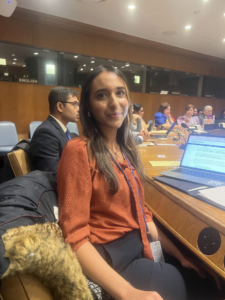
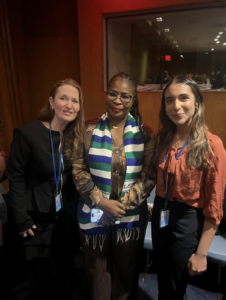
When I walked into United Nations Headquarters for the 70th Commission on the Status of Women (CSW70), I was delighted to have been able to participate in the following meetings:
At the meeting “ENSURING JUSTICE FOR WOMEN AND GIRLS WITH DISABILITIES SURVIVORS OF SEXUAL VIOLENCE IN CENTRAL ASIA: LEGAL AND PROCEDURAL CHANGES NEEDED TO GUARANTEE ACCESS TO JUSTICE,” I contributed concrete proposals on how to translate Kazakhstan, Kyrgyzstan, and Uzbekistan’s recent legal reforms into real, accessible justice for women and girls with disabilities. I pushed and encouraged disability‑inclusive evidence collection, survivor‑centred procedures, and formal roles for young women with disabilities in monitoring implementation. I left that meeting with a sharper understanding of how disability rights, gender justice, and legal design intersect—and how easy it is for reforms to fail if they are not built with disabled girls and women from the outset.
At the meeting “A DEFINING CHALLENGE OF OUR ERA: BEHAVIORAL ADDICTIONS AMONG WOMEN AND FEMALE-SENSITIVE PUBLIC HEALTH RESPONSES,” hosted by Türkiye and the Turkish Green Crescent Society, I argued that behavioural addictions should be treated as a structural public health and justice issue, not an individual weakness. I called for gender‑sensitive, community‑based services that recognise the pressures of caregiving, poverty, and digital algorithms shaping women’s online lives. From that discussion, I took away a deeper appreciation of how harms that look “personal”—from compulsive social media use to online gambling—are in fact shaped by policy choices and can be addressed through rights‑based health systems.
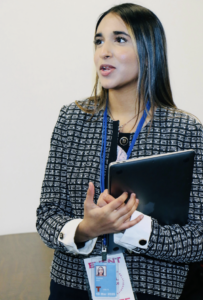
In the meeting “PATHWAYS TO JUSTICE: SCALING SOLUTIONS TOWARDS COMBATING TECHNOLOGY-FACILITATED GENDER-BASED VIOLENCE,” convened by Kenya, Spain, Norway, the United Kingdom and UN Women, I laid out an integrated approach that combines stronger platform accountability, specialised TFGBV units within justice systems, and youth‑designed reporting mechanisms that actually work for girls and young women. I emphasised that if young survivors cannot safely report abuse, access legal support, or trust the system, no amount of high‑level rhetoric will matter. I came away with new allies and clearer pathways to push for binding standards on tech‑facilitated abuse at both national and multilateral levels.
At the meeting “WOMEN MAKING WAVES: CHALLENGES, INNOVATIONS, AND OPPORTUNITIES FOR ADVANCING SUSTAINABLE AND INCLUSIVE WATER MANAGEMENT – ON THE OCCASION OF CSW AND THE WORLD WATER DAY 2026,” hosted by Israel, I focused my interventions on recognising women and girls as co‑architects of water governance, not just “stakeholders.” I highlighted examples of young women leading community water initiatives and argued for financing and governance models that give them decision‑making power over resources and infrastructure. The key lesson I drew from that space was how climate, water, and gender justice are inseparable and how centring girls in water governance can transform both access and accountability.
During the meeting “ADDRESSING THE LAWS AND PRACTICES THAT CRIMINALISE WOMEN DUE TO POVERTY AND STATUS WORLDWIDE,” co‑organised by Colombia, Liechtenstein, Romania, Thailand and multiple UN partners, I advocated for the decriminalisation of poverty‑linked offences and for investing in community‑led, non‑custodial alternatives shaped by women with lived experience. I stressed that laws targeting poverty, migration status, caregiving, and informal work are not neutral—they are tools that actively criminalise women’s survival strategies. From that conversation, I left with a stronger mandate to keep challenging “neutral” justice reforms that ignore how class, race, disability, and age determine who ends up in a cell.
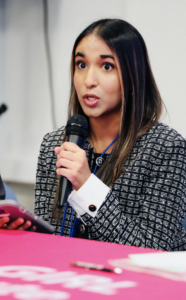
Finally, at the Girls’ Institute panel for the UN on capital systems for health care, I spoke as a featured speaker and the youngest member on the board on how global and national financing architectures can and must be redesigned to work for adolescent girls. Serving as a liaison for young girls, I translated their lived realities in clinics, schools, digital spaces, and communities into concrete recommendations on budgeting, accountability, and service design. What I learned there, and throughout CSW70, is that health care directly decides which girls are heard, who is healed, and who is left out.