
UN Intern Reflection: Selia Jindal, UNA-USA Fellow
Selia Jindal serves the United Nations Office of Outer Space Affairs (UNOOSA) Committee,
Policy and Legal Affairs (CPLA) team in Vienna, Austria. Selia is supported by a grant from the
UNA-USA Fellowship Initiative.
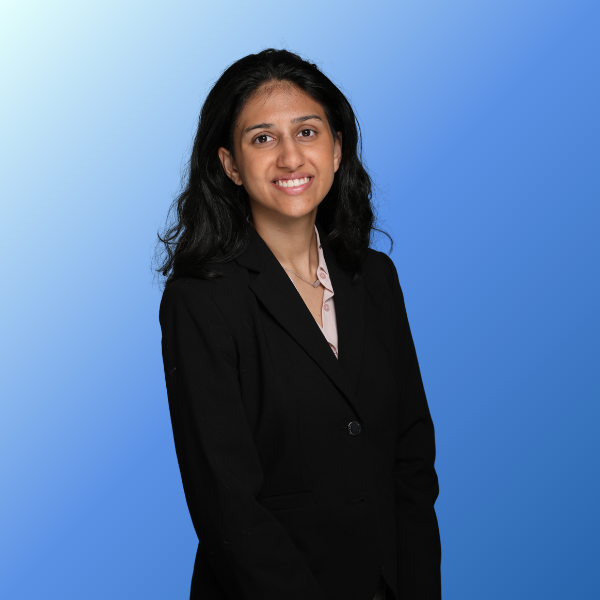
Hi, my name is Selia and I am going to share about my time at UNOOSA in Austria! OOSA was set up to ensure peaceful cooperation in space; my role focuses on legal and policy aspects of the mission. I get to work on topics like the use of nuclear power in space, long-term sustainability of Low Earth Orbit (LEO), and the legal aspects of space resource activity. These are all areas that I am really passionate about. Prior to joining the OOSA team, I co-founded a satellite team dedicated to sustainable, equitable space practice. We designed and built a 3U CubeSat and with support from dozens of partners around the world launched it into a 500 km polar orbit on a Falcon 9. I went on to get an international policy degree focusing on space system design – specifically, on the use of LEO-based systems in emergency response efforts and the militarization of space.
At the UN, I get to continue my work on sustainable and equitable approaches to space use, while surrounding myself with some of the brightest minds in international space policy. I aspire to use my time at the UN to learn and contribute as much as I can; I plan to use everything I learn here to better inform and guide my career as I continue to work in this field.
UNOOSA facilitates three sessions each year: the Committee on the Peaceful Use of Outer Space (COPUOS), its Legal Subcommittee (LSC), and its Scientific and Technical Subcommittee (STSC). At these sessions, we are responsible for facilitating collaborative work between states on topics like space traffic management, space debris mitigation, and applications of the United Nations space treaties. These meetings each last ~2 weeks and involve delegations from the 102 member states and ~50 observer organizations that are a part of COPUOS. They all happen in Vienna and are facilitated by the CPLA team. I have gotten to set the plenary dockets for these sessions, support working groups, and draft reports to be adopted by the committee.
At each of these three sessions, we work to draft and adopt a report – each containing ~15-20 sections. In order to adopt these reports, we need consensus from all member states on each
section. We edit, revise, and negotiate until we get that unanimous vote on each section. UNOOSA operates on the principle that our space community is a global one. Our system is designed to emphasize the importance of each state’s voice; it requires collaboration and compromise. It has taught me a lot about diplomacy and negotiation.
At our last sessions, I learned that while what happens on the plenary floor is important, often what happens at cocktail hours, during lunch, and in between sessions has a sizable and underrated impact. The relationships delegates form with one another inform global policy and create bridges between nations. The casual conversations and natural idea sharing that happens when so many brilliant, passionate people from around the world are in a room is truly unmatched.
This experience has shown me the impact individuals have on the system; previously, when researching these topics, everything seemed so formal and abstract. Published COPUOS reports use language like “Some delegations voiced…” and transcriptions are always of formal sessions where the Chair recognizes each speaker as “the honorable delegate from [country].” In the room though, you see people talking; you meet delegates and facilitate side meetings between them. The informal karaoke nights and long lines for coffee each morning makes it all feel more human. Hearing the suppressed yawns in the room and watching delegates try to sneak snacks in between agenda items gives the dialogue a different connotation. The body language and personality of each person adds so much to the narrative. I was completely missing that piece before joining UNOOSA. When I read COPUOS reports, my analysis was way too academic; I was missing out on so much of the narrative by not having the individual context. This is something I will definitely keep in mind as I continue to research, write, and work in this field.
I learned that the process is not nearly as formal, rehearsed, and stiff as it seems; it just presents as those things. In reality, these sessions are meetings between old friends and new acquaintances; there are histories and rivalries, but in the end it is a room of, primarily, jet-lagged, excited, but tired people forming relationships and sharing ideas. Each person there plays a pivotal role in this process.
This is my first time living abroad. I have found community both at the UN and in Vienna. I have learned so much from and am so grateful for the experiences I have had with those I have met, worked, and lived with at the UN and in Vienna.
Engaging at the UN has been fulfilling; I have met diplomats and world leaders from over a hundred nations and have colleagues from nearly every continent. My immediate team includes individuals from China, the UK, India, Japan, Brazil, Italy, Slovakia, Morocco, Canada, Germany, and so on. The environment is like no other. Each day I come into the office and get to learn about my colleagues’ home countries and share about my own.
I have learned how to write my name in Mandarin, tried rice candy from Japan, and added over a dozen recipes to my collection. It has also been rewarding to share my own background; for instance, I introduced my deskmate to the word “y’all,” colleagues and their siblings to Pop Tarts, and new friends to American football.
In Vienna, I have enjoyed meeting others around my age, practicing my German, and trying new things. I joined a local youth sports club and regional hiking group, which has helped me explore more of Austria and make new friends. It has been interesting to learn how the university system and inscription works here. I have found that Vienna is a truly international and uniquely patriotic city; it is very community oriented and offers incredible museums, unique architecture, and an old-school, sophisticated charm. During ball season, I tried my hand at the Viennese Waltz and am looking forward to attending a ballet at the Vienna State Opera house next month. I have been to over a dozen museums, castles, and palaces – each has blown my mind! I have also tried more bakeries than I can count – the bread here is sooo good – and learned to embrace cafe culture. I am definitely going to miss Vienna and will have to find a way to come back to visit friends here in years to come!
I am really grateful to the UNA-USA Fellowship for all of its support and the opportunities it has made available to me. I would urge any interested in this sort of work to jump in with an
open-mind, abundance of patience, and growth mindset. There will be ups and downs. It was definitely daunting to step out of the airport into a dark night with a suitcase and backpack, enter a country where I did not know a single person, and start navigating new streets alone.
However, it was more exciting than anything else and has been one of the greatest most insightful experiences I have ever had. The people I have met and work I have gotten to do has surpassed any expectation I had. The UN is truly a unique place where people from all over the world gather to share everything – apartments, ideas, passions, etc. It creates a unique environment that is pivotal to global understanding.
The UNA-USA Fellowship provides financial support for American undergraduates, undergraduates who have received their bachelor’s degree within one year of graduation, and first year master’s students who have secured unpaid internships with the United Nations. If selected, you can be awarded up to $13,000 for up to four months.
Learn More