When Learning Falls Behind: The Post-Pandemic Education Gap and What We’re Doing About It
When COVID-19 made landfall in 2020, it all felt momentary. I imagined it would swirl away as swiftly as it had arrived. But as the global shutdown stretched into weeks and months, school closures, glitchy calls, and inconsistent learning emerged as the new norm. For some students, that interruption turned into a years-long educational drought.
As an advocate for SDG 4: Quality Education, I have been interested in understanding how large the post-pandemic learning gap really is and what governments have done to help students catch up on unfinished learning.
“The COVID-19 pandemic has caused the most severe disruption to education systems in history.” — Audrey Azoulay, Former Director-General of UNESCO
According to a 2021 joint UNESCO, UNICEF, and World Bank report, The State of the Global Education Crisis, global school closures averaged 224 days. 1.6 billion learners were affected worldwide. The world had already been facing a serious learning crisis before the pandemic. Over half of ten-year-olds in low- and middle-income countries could not read or understand a simple text, which educators call learning poverty. By 2022, the number had increased to a staggering 70% due to prolonged closures and inequalities exacerbated by the pandemic. The 2021 report found that children from disadvantaged households, students with disabilities, and girls faced “compounding barriers to learning.”
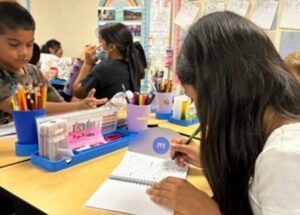
Photo Courtesy of Caden Choi
Post-pandemic learning loss has also been measured in the US. According to a 2022 analysis by the National Assessment of Educational Progress (NAEP), more commonly known as the “Nation’s Report Card,” 4th grade scores in both reading and math had dropped compared to those in 2019 across most states. The NAEP reported the “largest score declines” in 4th and 8th grade since initial evaluations were made 35 years ago. In addition to lower raw scores, the score gap between the lowest- and highest-achieving students in mathematics was larger in 2024 than it had ever been in the assessment’s history.
These staggering global and national statistics highlight the chasm that lies in the way of reaching the UN’s SDG 4: Quality Education, which strives to “ensure inclusive and equitable quality education and promote lifelong learning opportunities for all.”
“Reopening schools is not enough. We must help students catch up on lost learning.” — António Guterres, Secretary-General of the United Nations.
What is being done? The good news is that learning poverty is not being ignored. UNICEF, UNESCO, and their partners developed the RAPID framework, which consists of five evidence-based policy interventions aimed at addressing learning loss:
- Reach all children
- Assess learning levels
- Prioritize teaching the fundamentals
- Increase the efficiency of instruction
- Develop psychosocial health and wellbeing
A 2023 World Bank report surveyed and reviewed over 60 education systems in low- and middle-income countries across Asia, South America, and Africa. This report highlighted progress made by specific countries utilizing the RAPID framework. Côte d’Ivoire, for example, was featured as a beacon of hope for boosting literacy among its youngest students. Its revamped reading program and robust teacher training program have effectively accelerated the rate of learning for millions previously facing learning poverty. Countries like Ghana, India, and Zambia have also provided targeted learning by grouping students by proficiency level rather than by age. These new student evaluations have proven fruitful in tailoring high-impact instruction for many students.
The US government has likewise responded to post-pandemic learning loss by passing legislation aimed at accelerating learning. As part of the 2021 American Rescue Plan (ARP) Act, the Elementary and Secondary Emergency Relief (ESSER) Fund was formed, providing over $120 billion in aid to K–12 schools. The ARP included billions in additional funding for homeless youth, Tribal education agencies, Native Hawaiian and Alaska Native students. In this package was a stipulation that a certain percentage of funds be used directly to combat learning loss. A year later, the National Partnership for Student Success (NPSS) was formed with the goal of providing an additional 250,000 academic tutors, mentors, and student success coaches by 2025 to help students recover from the educational impacts of the pandemic.
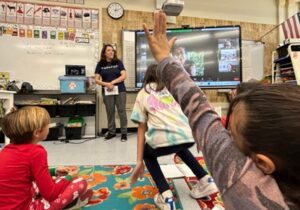
Photo Courtesy of Caden Choi
Many similar actions have been taken in states across the US. My home state of California is an example of state governments tackling learning gaps head-on. The Assembly Bill 86 COVID-19 relief package included $6.6 billion for schools ($2 billion for in-person instruction and $4.6 billion for Expanded Learning Opportunities Grants (ELO-G).
ELO-G funding was provided to districts to support local educational agencies (LEAs) in educational recovery efforts. The funding was intended not only to support but to accelerate the closure of learning gaps in the following ways:
- Extended instructional time (additional or longer school days)
- Expanded academic services (supplemental instruction and tutoring)
- Additional training for school staff
California went a step further by creating the Learning Recovery Emergency Block Grant (LREBG) through Assembly Bill 182 (AB 182). The LREBG is a one-time $6.8 billion fund available through the 2027–2028 school year. It helps school districts and charter schools support programs similar to those provided by ELO-G, but also expands early literacy programs for preschool to 3rd grade students and invests in mental health and social-emotional support.
As abstract as it may appear, learning poverty is a reality for millions, and it must be challenged. Article 26.1 of the Universal Declaration of Human Rights (UDHR) affirms “everyone has the right to education” and “elementary education shall be compulsory.” It is a fundamental human right that we must espouse as advocates of SDG 4.
What comes next? We should support solutions that have already proven successful in closing learning gaps and reclaiming lost ground. This includes prioritizing foundational skills (especially literacy) and propelling recovery efforts by boosting small-group, high-impact tutoring. Our partners are critically important in this moment. We need to develop and grow preexisting partnerships (SDG 17) with schools and local educational agencies. Lasting progress also depends on breaking down systemic inequities tied to socioeconomic status, gender, and racial or ethnic background.
COVID-19 didn’t just close classrooms—it disrupted an entire generation of learners. As community members, leaders, and advocates, we can turn that disruption into opportunity. One simple task we can do is keep our schools, school boards, and district leaders accountable. Ask how much of your federal and state recovery funding is specifically going toward addressing learning loss. Find out what programs are in place to expand academic services, extend learning time, and increase mental-health support. Get involved with community programs; be a tutor, mentor, or coach. Through advocacy and action, we can lay the bricks for lasting change.
“The very high levels of learning poverty, both before COVID and now, violate children’s right to education.” — The State of Global Learning Poverty