Lana’s CSW70 Blog Post
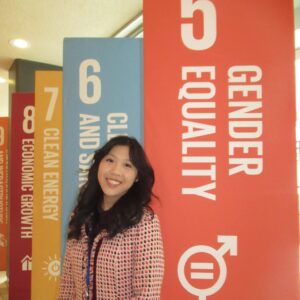 The opportunity to represent young girls and youth has been such a transformative experience. This conference, known as the United Nations 70th Commission on the Status of Women, is a global gender equity conference spearheaded by UN Women to further the rights of women and girls around the world. At this conference, member states, stakeholders, delegates, and non-governmental organizations gather together to discuss their work and create a final statement outcome document for the future. This statement outlines key goals and metrics of success that can be used by countries and governments to ensure they are passing the correct policies.
I attended many sessions during the week of the conference, but I will go through my favorite one from each day!
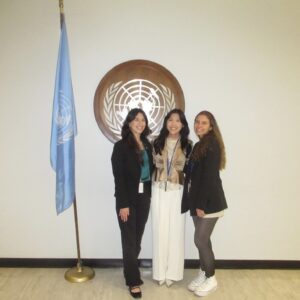
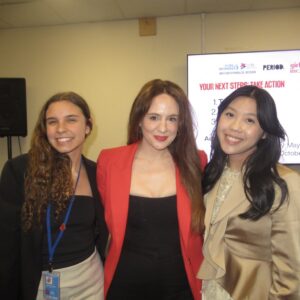
On day 1, my favorite session I attended was the Core Principles for Meaningful Youth Participation, hosted by the United Nations Youth Office. This session outlined a specific policy outline for the United Nations to include youth voices. Because right now a lot of officers and official decisions are all made by older people, the United Nations is currently trying to integrate inter-generational collaboration so the next generation of leaders knows how to carry on their work. Additionally, youth are proven to be more knowledgeable and equipped to the current times, which can lead to more positive action and policies. This day, I met two other delegates, named Shivi and Ilinca. Ilinca was actually a past Girl Up Global Teen Advisor from two classes before me, so we bonded and were able to find so much in common as well. I am so glad I got to meet them–meeting girls from across the country like them truly reminded me of the power of girlhood. Additionally, I had the opportunity to meet my friend Luiza from Brazil! She is a current Girl Up Global Teen Advisor with me, and she had traveled all the way from Brazil to attend the conference. I had only ever met her in online meetings, so having the opportunity to get to know her in-person was so wonderful. She is such a lovely person and I felt so empowered after speaking to her. She has worked within Brazil to pass many climate change and menstrual equity policies.
On day 2, I attended the NGO CSW Briefing, hosted by the United Nations and UN Women. This session was my favorite because it had critical updates about the United Nations and how they are currently reforming the system to be more efficient. Right now, it can really seem like they aren’t trying to improve, but after attending this briefing and talking to United Nations executives, I truly saw their reform efforts. For example, they are working to increase administrative efficiency through updates and budget re-allocations. They also are working more on public data and studies that are more relevant to what is needed at the moment. They recognize how often the United Nations can publish data that nobody really cares about, and meetings can drag on. As a result, they are looking to minimize this by reorganizing structural reforms and data consolidation. This would also make it more friendly for civil society and other stakeholders. Lastly, there is a really controversial topic going on right now about merging UN Women and the UNFPA, the United Nations office for reproductive rights. Many people felt they were minimizing UN Women’s impact while others felt this could genuinely increase efficiency. That day, I also had dinner with other delegates, and I had the opportunity to meet women from all over the country, and across all ages. Getting to know their stories was so wonderful.
On day 3, I attended a very interesting session about women’s reproductive rights and healthcare. They talked about the systemic injustices within women’s healthcare, especially when it comes to menstrual cycles and reproductive care. Lots of women often experience pain, but this actually is not normal, and the lack of awareness and research is a systemic issue. On day 4, I attended World Water Day, where I learned more about the intersection between water security and gender equity. Women and girls spend 250 million more hours collecting water for their families, which is 3 times the amount of men. These 250 million hours are lost opportunities for education, income, and personal leisure time. I met governmental leaders from countries like Nepal and Malta, and I heard from the lived experiences of a Mayan woman, Toribia Alicia Lopez Lopez. Here, she spoke her native language, and she informed us that it was actually the first time her indigenous language had ever been spoken within the United Nations walls–and we were the first to hear it live. It was such a powerful moment, and I felt honored to be able to experience that. Afterward, my friend Ilinca and I actually ran into her in the United Nations bookstore, and we had the opportunity to talk to her personally.
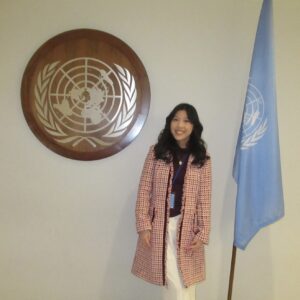
My experience at this conference was truly moving. I met some of the most inspiring, genuine, and powerful women from across the globe. I know sometimes the fight feels hopeless–but I promise, there are people out there still fighting. We are still fighting, discussing these issues and ensuring these discussions actually lead to action.
This conference reminded me of how I see bravery and astounding courage in every girl I know. I have seen it in the lived experiences of indigenous women leading climate action. In the footsteps of girls who walk miles to fetch their families water. In the research efforts of doctors fighting for women’s reproductive health. In the writings of youth demanding for seats at the table. In the stories of underrepresented girls who are still battling systemic inequalities in a world not built for young girls to succeed. My experience reminded me that we are still holding governments accountable and are working towards change in a world that discourages it–especially from young girls and women.