
Reflection on CSW70: Dismantling Barriers to Gender Justice, Youth Participation, and Climate Resilience
In March, I was honored to attend the UN Commission on the Status of Women, a space marked by contradictions and contestation—and also immense care, commitment, and courage from feminist advocates around the world.
As someone whose research and advocacy is at the convergence of gender, anti-militarism, and environmental justice, I was honored to learn from feminist leaders who shared their visions for and work towards care-centered approaches to climate security and resilience.
At an event on “Care & Climate: How Care Systems Shape Access to Justice in a Just Transition,” government representatives, grassroots feminist organizations, and researchers from across the Global South came together to share evidence and lived experiences related to care and climate crisis response. The discussion began with remarks by Ermelita V. Valdeavilla, the Chair of the Philippine Commission of Women, who emphasized that it is women’s unpaid labor which “serves as the emergency care economy we rely on” even as it is “unrecognized and unfunded and excluded from climate disaster frameworks globally.” Recognizing that women already spend an average of seven hours per day on unpaid care work—a number that rises to thirteen or more during climate disasters—Valdeavilla urged feminists to continue pressuring governments to recognize that “women’s labor is valuable and it is neither free nor inexhaustible,” and to pursue climate crisis response policies that both redistribute and dismantle “the patriarchal architecture of unpaid care.”
This theme of care as a life sustaining yet often-overlooked form of climate crisis response carried into a side event organized by the government of the Solomon Islands on “Pacific Women at the Frontlines of Climate and Security,” which brought together Pacific women in government and grassroots roles. Here, Ruth Kwansing, the Minister of Women, Youth, Sport, and Social Affairs for Kiribati, described climate change as a “foremost security threat because it shapes the safety and daily lives of those least responsible for it,” a framing that stood out to me as someone whose research centers on unsettling militarized understandings of climate security. Minister Kwansing gave a reminder that “across an ocean of violence, women carry inter-generational knowledge embedded in our faith, our lands, our oceans,” and that Pacific nations have long understood that women are “at the heart” of climate crisis response even as international policies have systematically overlooked their needs and perspectives.
Her message was echoed by Doris Tulifau, a representative from the We Rise Coalition of six feminist organizations from across the Pacific. She recalled the most recent cyclone in her home country of Samoa, and how “in the middle of that chaos there were women.” It was women who transformed schools and churches into impromptu evacuation centers, who fed communities with limited resources, who rebuilt damaged houses, who kept their families anchored when the world around them was upended by climate catastrophe. “No one had assigned them a role or given them a budget, no development policy was telling them what to do, but they did it,” Tulifau stated, before urging governments claiming to support climate security to channel resources towards women’s grassroots organizations. “We know who needs support,” she said. “We are trusted by the people we serve.”
Across these events, feminist grassroots and government leaders alike provided a vital perspective on what (demilitarized approaches to) climate security must look like, as well as the need to recognize women’s unpaid care work and materially support women-led organizations holding their communities together.
It was also significant to be present for the Launch of the Core Principles for Meaningful Youth Participation in Intergovernmental Processes and Across the Work of the UN, a step forward resulting from years of relentless youth advocacy. I was especially struck by youth activist Daphne Frias’ reminder that there is a “misconception that when we come into this building, we should just be honored to be let into these hallowed halls… [but] this building is ours too. I can speak comfortably [here] because I know the power of my own voice.” Her words anchored me throughout the rest of my time at the CSW, as a reminder to engage in discussions critically and with confidence in my own contributions as a youth advocate.
At the Launch of the Core Principles, multiple youth delegates brought up practical constraints to our participation that remain unaddressed even by historic new commitments: the need for travel and subsistence support, capacity-building, and improved digital infrastructure to facilitate remote participation. In partnership with UNA-USA, I am eager to be part of continued efforts to build formalized and, crucially, fully-funded avenues for youth participation in decision-making processes as genuine collaborators.
Across all the CSW events I attended and many conversations in between, there was repeated reckoning with the challenges of conveying grassroots feminist demands and experiences in a space riddled with hierarchy and institutional barriers. The absence of women due to war, financial constraints, and U.S.-imposed travel restrictions (including a $15,000 visa bond for citizens of 50 countries) was visible and tangible, while others chose to boycott the conference due to U.S. complicity in ongoing human rights atrocities.
Across the street from the UN, at the NGO-CSW, feminists from grassroots organizations convened counter-spaces of our own that were conversational, nonhierarchical, and honest. I engaged in NGO-CSW events hosted by grassroots organizations from Fiji, Haiti, Madagascar, Papua New Guinea, Rwanda, Samoa, Sudan, and Tanzania, sharing women’s struggles at the frontline of conflict, climate crisis, resource governance, and solidarity movements.
Despite the numerous barriers and constraints of the CSW, so many feminist organizers and advocates and government officials met the moment with honesty, candid storytelling, a refusal to frame their remarks around dominant agendas, and an unwavering commitment to centering women’s care work and unpaid labor in critical conversations around justice and climate crisis response.
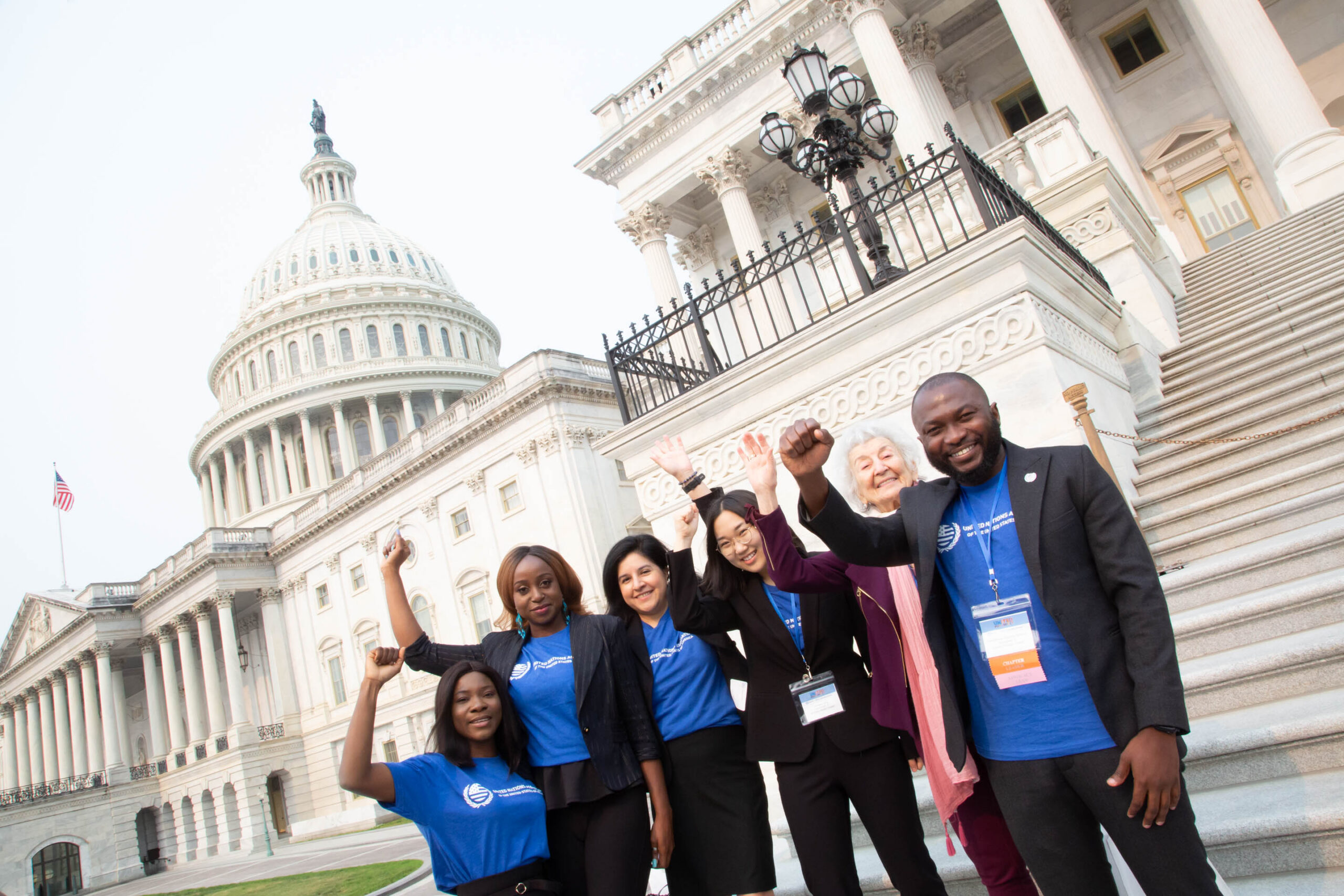
As a former Global Goals Ambassador for Gender Equality, I am grateful to the United Nations Association of the United States of America and Madison Peak for the opportunity to attend the CSW as an NGO delegate, and will carry the lessons I’ve learned into continued advocacy for intersectional gender justice.