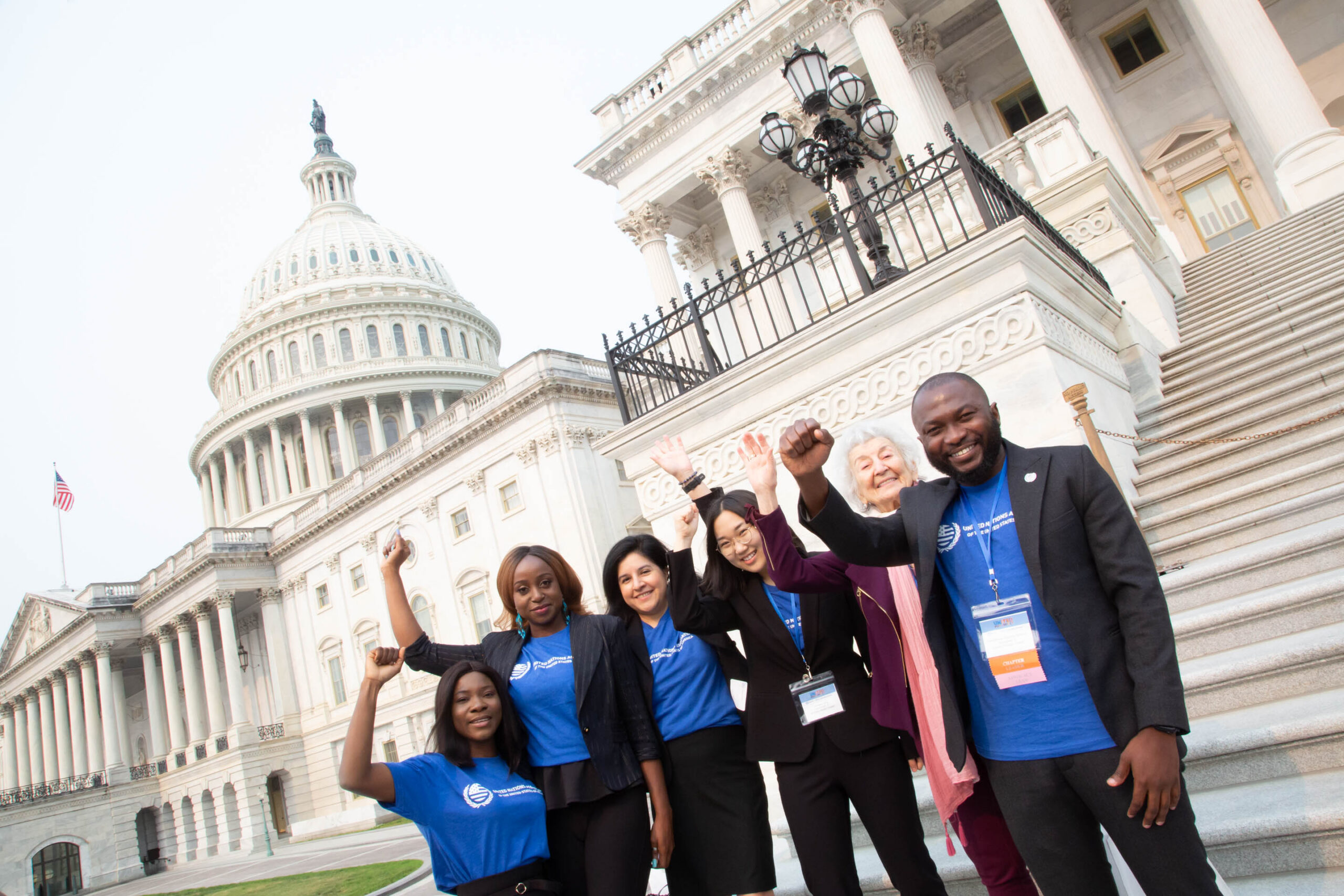

Stefanie’s Reflections on the Seventieth Session of the Commission on the Status of Women
70th Session of the United Nations Commission on the Status of Women
“Today I stand here heartbroken. Never have I seen so many children suffering from war and violence, injured and dying at the hands of unaccountable leaders,” said Malala Yousafzai at the opening of the Seventieth Session of the Commission on the Status of Women at the United Nations. Her words set the tone immediately. This was not a routine gathering. It was a moment marked by urgency, accountability, and a growing global question: are longstanding commitments to gender equality being carried out in practice?
Across the session, one message was unmistakable. Gender equality is no longer measured by what governments promise on paper, but by whether institutions are willing and able to protect rights, enforce standards, and act when those commitments are tested. The conversation has shifted from declaration to delivery.
The scale of participation was immediately evident. Discussions moved fluidly between legal commitments, lived experiences, and long-standing international promises that continue to shape the global gender agenda.
What stood out most was not only the presence of government leaders, advocates, and civil society representatives from around the world. It was the clarity of the moment. Speakers returned repeatedly to a shared concern: while rights may have expanded in formal frameworks, true access to justice remains uneven, fragile, and in some places increasingly contested.
As the United Nations Secretary-General noted during the session, “Women’s rights are under attack. We cannot stand by while progress is reversed.”
That observation re-framed the work of the Commission. The central question was no longer whether equality exists in law, but whether women and girls can rely on those protections in practice.
Key highlights
Across panels, negotiations, and informal conversations, several themes emerged consistently throughout the session.
1. The United States’ opposition to the Agreed Conclusions marked a significant procedural shift.
For the first time in seventy years, the Commission adopted its Agreed Conclusions by recorded vote rather than consensus after the United States cast the only vote against adoption. U.S. objections centered on language related to gender definitions, intersectional discrimination, and sexual and reproductive health and rights.
This outcome signals a structural shift in Commission dynamics. Consensus can no longer be assumed as the default framework for international agreement on gender equality. Taken together, these developments suggest the Commission is entering a period in which procedural consensus can no longer substitute for substantive agreement.
2. Legal protections alone do not guarantee access to justice.
The priority theme of the session focused on strengthening access to justice for women and girls. Discussions moved beyond courts and legislation toward the everyday realities that determine whether rights are usable.
Speakers emphasized that while many countries have adopted progressive legal frameworks, implementation gaps remain widespread. In some contexts, justice is explicitly denied. In others, it is formally recognized but practically inaccessible due to cost, distance, care giving responsibilities, stigma, institutional distrust, and structural barriers embedded in legal and social systems. In several sessions, these conditions were described as forms of gender apartheid.
The message repeated across discussions was clear: equality cannot be measured by legislation alone, but by whether rights function in people’s daily lives.
3. Rollback of women’s rights was addressed directly and openly.
Participants did not describe the present moment as one of incremental progress with isolated setbacks. Instead, speakers characterized the current moment as a period of deliberate regression in several regions.
Across sessions, leaders pointed to shrinking civic space, challenges to established gender language, and renewed pressure on long-standing protections as indicators that women’s rights are being actively contested.
As Secretary-General António Guterres stated, “We still live in a male-dominated world and a male-dominated culture. Gender equality is and always has been a question of power.” He further noted that backlash reflects the response of entrenched systems when existing power structures begin to shift.
4. Conflict-related violations against women and girls are moving toward stronger accountability frameworks.
Speakers rejected the idea that violence against women and girls in conflict settings can be treated as a secondary humanitarian issue. Instead, these violations were framed as central concerns of international accountability.
There were repeated calls to strengthen legal recognition of systematic gender-based exclusion and violence, including expanding conversations around recognition of gender apartheid in Afghanistan under international law. As Malala Yousafzai stated, “True justice does not defend the humanity of children in one place and ignore it in another.” She urged governments to move beyond statements toward action, asking, “How long will you allow the law to stand still while injustice evolves?”
5. Digital violence is increasingly recognized as a barrier to participation and justice.
Online harassment, coordinated disinformation campaigns, and non-consensual sexual deepfakes were repeatedly identified as threats to safety, leadership participation, and access to legal protection.
Speakers emphasized that digital harms are not isolated incidents. They operate as systems that shape who is able to participate safely in public and political life.
As Annalena Baerbock, President of the 80th session of the United Nations General Assembly, observed, digital abuse functions as a mechanism through which women are “silenced, humiliated, and controlled.”
6. Civil society organizations remain essential but under-resourced.
Women’s organizations were consistently identified as first responders, legal guides, and accountability partners in advancing access to justice. Despite their central role, many continue to operate with unstable funding and limited institutional coordination.
Civil society representatives described frustration with what the Working Group on discrimination against women and girls called “the persistent gap between feminist expectations and our actual institutional offerings.”
Reflection and interpretation
What emerged from the Seventieth Session of the Commission on the Status of Women was not simply a policy agenda. It reflected a shift in how gender equality itself is being understood at the international level.
The discussion repeatedly returned to one distinction: equality is not defined by what institutions promise, but by whether they are willing to make protections real in practice.
This shift has important implications. Gender equality is increasingly being framed not only as a legislative objective but as a question of governance capacity. Courts, funding systems, care infrastructure, digital regulation, and service access are no longer secondary supports. They are core components of justice itself.
At the same time, the session made clear that gender equality is in a more contested political phase. Rather than describing a steady trajectory of progress, speakers pointed to a period in which established norms are being renegotiated, narrowed, or challenged directly. The departure from consensus adoption of the Agreed Conclusions reflected that broader reality. Consensus is no longer a reliable signal of shared commitment. It can also indicate where protections are under pressure.
Another notable shift was the willingness to name power explicitly. Conversations moved toward enforcement, accountability, and institutional credibility. When access to justice depends on transportation, caregiving responsibilities, digital safety, or financial resources, inequality cannot be understood as accidental. It is structural. Recognizing that changes the scope of responses required. Increasing women’s leadership is not only a matter of fairness. It directly affects the ability of institutions to respond to gender-based violence, economic inequality, and discrimination.
Conflict settings further reinforced this point. Violence against women and girls was framed not as a secondary consequence of instability but as evidence of systemic gaps in international protection mechanisms. Calls to recognize gender apartheid and strengthen accountability processes reflected growing expectations that global institutions must move beyond documentation toward enforcement.
At the same time, the expanding role of digital harm highlighted how quickly the policy landscape is changing. Online abuse, disinformation, and image-based violence are reshaping who can safely participate in public life. Legal systems designed for earlier communication environments are now being asked to respond to challenges that cross borders instantly and operate without clear jurisdiction. That tension will shape the next phase of global gender governance.
Perhaps most significantly, the session underscored the ongoing gap between symbolic recognition and operational support. Women’s organizations were consistently described as essential partners in delivering justice on the ground, yet they remain underfunded and structurally peripheral to decision-making processes. This contradiction reflects one of the central challenges ahead: institutions cannot credibly claim progress while relying on actors they do not adequately resource.
Taken together, these themes suggest the future of gender equality will depend less on new declarations and more on sustained institutional follow-through at national and multilateral levels. The question is no longer whether commitments exist. It is whether systems are prepared to implement them with coordination, urgency, and political resolve.
That shift raises several important questions moving forward:
- How do institutions move from commitments to meaningful implementation?
- What does accountability look like when governments fail to uphold women’s rights?
- How can justice systems become accessible to women in rural and marginalized communities?
- And how do we ensure that the voices of women most affected by injustice shape the solutions?
These are not abstract questions. They shape how international commitments become real protections in everyday life.
What this means in practice: steps individuals and institutions can take
One of the clearest messages from the Commission on the Status of Women was that gender equality is shaped not only through international agreements, but through the systems people strengthen in their own communities.
Many of the barriers discussed at the United Nations are not abstract. They are connected to decisions about funding, access to services, legal protections, and participation in civic life. Advancement depends on institutions possessing both the necessary resources and organization to ensure that rights can be effectively exercised.
There are several practical ways individuals and communities can help advance that work.
Support organizations that make access to justice possible
In many countries, civil society organizations provide the first point of contact for people seeking legal advocacy, survivor support, or protection from discrimination and violence. These organizations often serve as the bridge between formal rights and lived reality.
Ways to engage include:
- volunteering with organizations that provide legal advocacy or survivor services
- contributing financial support to community-based justice organizations
- advocating for stable public funding for shelters, legal aid, and support services
These institutions are essential parts of access to justice infrastructure in everyday life.
Stay informed about changes to civil rights protections
Legal protections evolve over time. In many places, nondiscrimination protections, access to reproductive health care, workplace equity policies, and protections related to gender identity continue to be shaped through legislative and judicial decisions.
Individuals can:
- participate in public comment opportunities and community forums
- support local and national nondiscrimination protections
- stay engaged with civil rights enforcement processes in their own countries
Public participation helps determine whether protections remain meaningful in practice.
Support policies that strengthen justice infrastructure
Access to justice depends on systems that extend beyond courts alone. Transportation, childcare access, economic security, education, and legal services all shape whether people can use the protections available to them.
Individuals can:
- engage with elected officials on policies that affect access to legal and social services
- support legislation addressing gender-based violence and workplace equity
- participate in local decision-making related to public safety, education, and community services
Infrastructure determines whether rights function in daily life.
Help strengthen safer participation in public life
The Commission highlighted digital violence as a growing barrier to leadership, journalism, advocacy, and civic engagement. Online harassment and disinformation campaigns affect who feels able to participate in public decision-making across many regions of the world.
Practical steps include:
- supporting media literacy and digital safety initiatives
- encouraging organizations to adopt clear digital conduct protections
- advocating for policies that address online harassment in workplaces, schools, and public institutions
Safer participation environments expand who can lead, speak, and shape public life.
The future of gender equality depends not only on international commitments, but on the institutions people strengthen, the protections they defend, and the systems they help sustain over time. Each of those actions contributes to whether rights exist in principle or function in practice.
Justice for women and girls is not only a policy issue. It is a measure of the kind of world we are choosing to build.
Stefanie P.K. Munsterman, MBA, MSL
She/Her