When Multilateralism Stopped Being Distant: Reflections on Gender, Advocacy, and CSW70
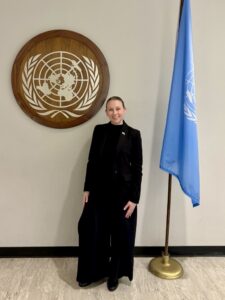 When I was in graduate school at Boston University, I wrote my master’s thesis on the successes and failures of international forums in advancing women’s rights, hoping that one day I might attend the Commission on the Status of Women (CSW) myself. I did not know that just a few years later, I would have the opportunity to attend CSW70 — my first ever UN conference — with the United Nations Association of the United States of America.
For years, CSW existed in my mind as something far-fetched — something I studied through research papers, policy proposals, and academic debates about whether multilateral institutions like the United Nations can actually create meaningful and sustainable change. When I was writing that thesis, CSW was more of an object of study than a lived experience.
Being in the room changed that entirely. I shared daily reflections throughout my time at CSW70 (Day 1, Day 2, Day 3, Day 4), trying to capture what it felt like in real time, but even those posts only scratched the surface of what it means to experience global advocacy and multilateralism from the inside.
What surprised me most about CSW70 was not the scale of the event, but the humanity of it. It is easy to imagine spaces like the United Nations as distant and formal, where progress happens only through diplomatic speeches and official negotiations. But when you’re sitting in UNHQ Conference Room 4 and hear UN Under-Secretary-General and UN Women Executive Director Ms. Sima Bahous say—
“Be strong. Be bold. Always think of the women and girls on the ground who are looking to you and Member States to be their voice”—
you pause for a moment and realize these institutions only work when people choose to engage with them. As someone who once studied international organizations from a distance at Arizona State University, hearing that in that setting reframed how I think about multilateralism entirely.
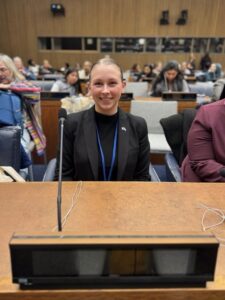 In many ways, that was my “ah ha!” moment. Hearing that grounded everything I had studied in something entirely human — these multilateral spaces are sustained not only by countries, but by people like you and me who continue to show up, advocate, and push for progress even when it seems impossible.
When I defended my master’s thesis, I received pushback for my optimism about the future of the rights of women and girls. But attending the largest global convening on advancing those rights — meeting people from every corner of the world, speaking different languages, united in purpose — reminded me why I held onto that optimism in the first place. Women and girls are raising their voices, and the world is learning to listen.